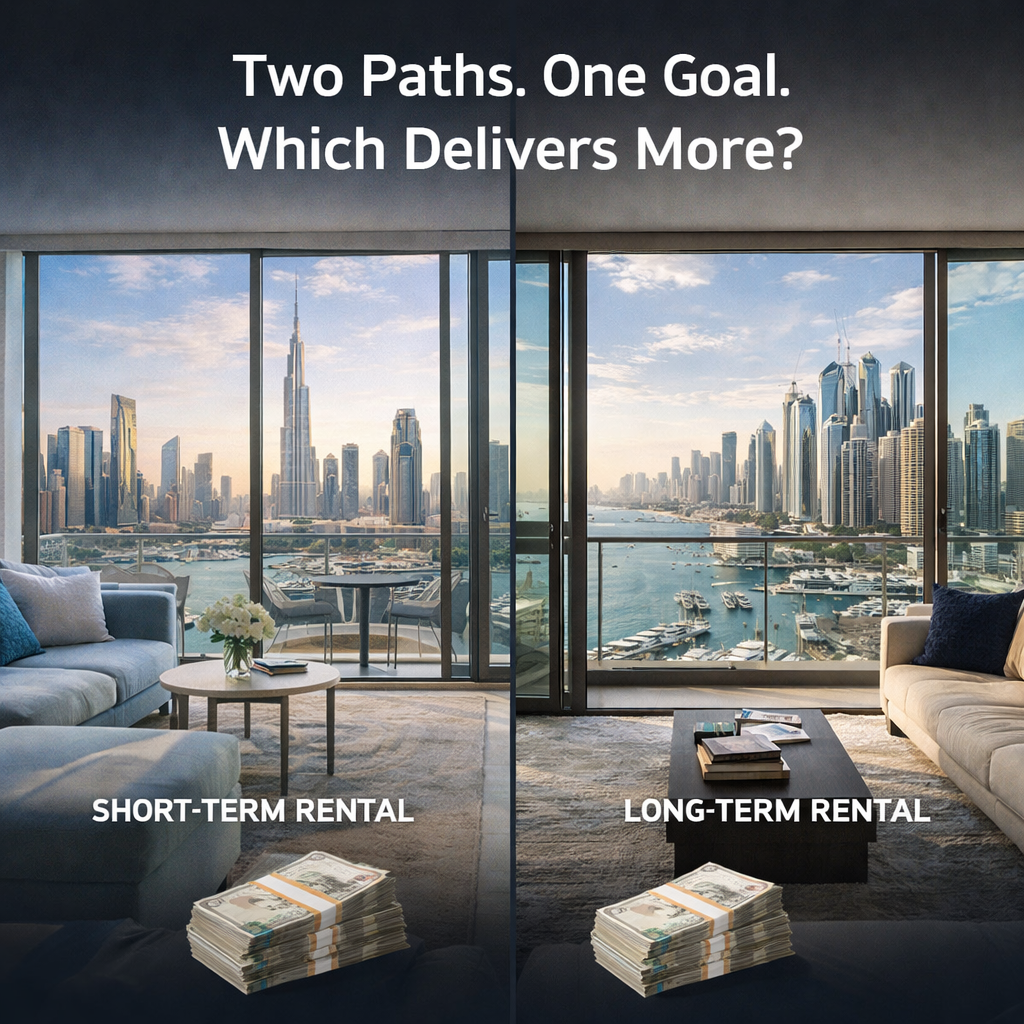
Offices
From flexible co-working space and Grade A towers (DIFC, Sheikh Zayed Road) to mid-market business centres — office demand is driven by finance, professional services and regional HQs.


Dubai’s commercial market is diverse and strategically positioned for regional business. The city supports a range of asset types (offices, retail, industrial/warehousing, and land) with clusters that cater to finance, trade, hospitality and logistics. This diversity provides multiple entry points for investors and occupiers depending on risk appetite and sector focus.
From flexible co-working space and Grade A towers (DIFC, Sheikh Zayed Road) to mid-market business centres — office demand is driven by finance, professional services and regional HQs.
Retail includes street-front shops, mall units and food & beverage outlets. Location, footfall and landlord fit-out policy drive rental values.
Logistics parks, last-mile fulfilment warehouses and storage units are focused around Ras Al Khor, Jebel Ali and other logistics corridors.
Investors sometimes acquire entire buildings for multi-tenant income or convert assets to mixed-use offerings (hotel, serviced offices, retail podiums).
Strategic land parcels enable bespoke developments but often require long lead times, masterplanning and approvals from free zone or municipality authorities.
Demand clusters around central business districts, finance precincts and major road corridors. Notable hotspots include Downtown Dubai, Dubai International Financial Centre (DIFC), Business Bay, Jumeirah Lake Towers (JLT) and Sheikh Zayed Road. Choose a location based on tenant profile, accessibility and cost per square foot.
Tip: proximity to metro, parking and hospitality dramatically improves retail & office lettability.
Leasing is lower upfront, faster to occupy and gives flexibility for changing space needs. Common for occupiers and businesses testing markets.
Buying suits long-term investors seeking capital appreciation or control of the asset, but involves higher capital, transaction costs and potentially longer holding management.
Depending on use (office, F&B, retail, industrial), you may need:
Fit-out costs vary hugely by finish and use. Typical ranges (very broadly) are: simple office refurbishments from modest sums per sqm, premium fit-outs (high-end finishes, data, MEP works) can run markedly higher. Always obtain multiple contractor bids and factor in landlord approval times and snagging contingencies.
| Cost type | What to budget for |
|---|---|
| Rent | Market dependent — typically quoted per sq. ft / per annum for offices & retail. |
| Service charges | Estate & building running costs — request historic breakdowns from the landlord. |
| Fit-out | Contractor costs, consultants (M&E, architects), permits and provisional sums for furniture and IT. |
| Security deposit & bank guarantees | Often required under lease (e.g., 3 months rent as deposit; some landlords accept bank guarantees). |
| Legal & advisory | Lawyers, property consultants and due diligence costs. |
Timelines depend on the transaction type. Simple lease negotiations and landlord sign-off can take 2–6 weeks; complex fit-outs, permitting and property purchases (with due diligence and approvals) can take several months. Build contingency time into your project plan.
Good management focuses on minimising downtime, enforcing lease covenants, overseeing contractors and maintaining MEP systems. For larger assets, use professional property managers who provide accounting, reporting, preventative maintenance and tenant relations.
Yes — companies commonly register a branch or use free zone entities depending on visa, tax and ownership preferences. Seek licensing advice early.
Service charges cover common area maintenance, utilities (where communal), security and estate management. Request detailed past invoices before signing a lease.
Leases are negotiable — landlords often offer incentives (rent-free periods, fit-out contribution) for longer leases or high-quality tenants.
"I moved from the UK to Dubai and was completely unfamiliar with the market. My Yoho consultant walked me through every step — from shortlisting communities to negotiating the price and handling all the paperwork.

"I bought an off-plan apartment on their recommendation — the developer delivered on time and my property is now worth 25% more than I paid. Yoho's market insight is genuinely impressive."
"I've been working with Yoho for over a year now, and they've consistently delivered exceptional results. Their team is knowledgeable, responsive, and truly cares about their clients' success."
"Sold my apartment in Business Bay within three weeks at above asking price. The marketing was professional and the team kept me updated at every stage. Highly recommend."

Lorem ipsum dolor sit amet, consectetur adipisicing elit. Dignissimos repellendus repudiandae incidunt quidem pariatur expedita, quo quis modi tempore non.
We want to give you 10% discount for your
first order,
Use discount code at checkout


We want to give you 10% discount for your
first order,
Use discount code at checkout